
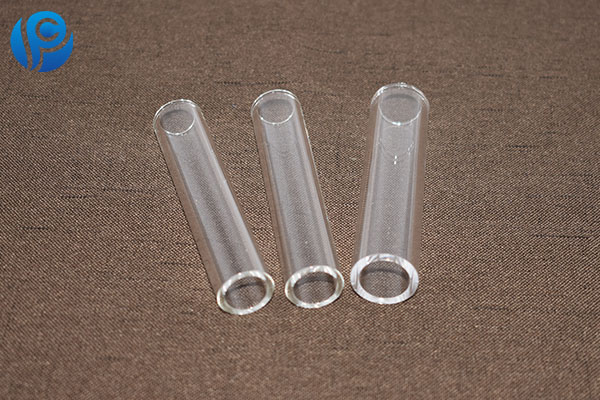
Precise Calculation of Glass Tube Wall Thickness and Pressure Resistance in High-Pressure Environmen

Designing a glass tube to withstand high internal pressure requires more than just choosing a strong material; it demands a precise calculation of the required wall thickness. This is essential for the safety and reliability of equipment such as sight glasses, flow meters, and chemical reactors.
The Fundamental Equation: Barlow's Formula
The relationship between pressure, wall thickness, and tube diameter is described by the hoop stress formula, commonly known as Barlow's formula for thin-walled cylinders:
σ = P × D / (2 × t)
Where:
-
σ = Hoop stress in the glass wall (the force trying to pull the tube apart)
-
P = Internal pressure
-
D = Mean diameter of the tube
-
t = Wall thickness
The formula shows that stress is directly proportional to the internal pressure and the diameter, but inversely proportional to the wall thickness. To find the required wall thickness, you can rearrange the formula:
t = (P × D) / (2 × σ)
Applying the Formula: A Step-by-Step Example
Let's illustrate this with a practical example. Suppose you need a glass tube to withstand an internal pressure of 200 psi (1.38 MPa). The tube has a mean diameter of 50 mm. The glass you are using is borosilicate, with a working stress of 1,000 psi (6.89 MPa).
Step 1: Identify the Variables
-
Pressure (P) = 200 psi
-
Diameter (D) = 50 mm
-
Working Stress (σ) = 1,000 psi
Step 2: Apply the Formula
t = (200 × 50) / (2 × 1000) = 10,000 / 2000 = 5.0 mm
Therefore, the calculated wall thickness required is 5.0 mm.
Factors That Affect the Required Wall Thickness
The simple formula provides a starting point, but several real-world factors can significantly alter the required thickness.
Temperature is a critical factor. As the operating temperature increases, the working stress of the glass decreases. A derating factor must be applied to the stress value in the formula.
Corrosion and mechanical stress from vibration or thermal cycling also require consideration. A safety factor of 4:1 or higher is standard to account for these effects.
The Safety Factor: A Margin for Error
The safety factor is the ratio of the burst pressure to the maximum operating pressure. A factor of 4 is typical, meaning the tube is designed to be four times stronger than the maximum pressure it will encounter. This accounts for imperfections, chemical attack, and unexpected pressure spikes.
Real-World Applications
This precise calculation is critical in many industries. In chemical reactors, sight glasses must be designed to withstand high pressures and temperatures. In flow meters, accurate wall thickness ensures the structural integrity of the flow path. In medical devices, precise calculations are essential for the safety and reliability of equipment such as syringes and catheters.
The Bottom Line
Calculating the required wall thickness for a high-pressure glass tube involves a combination of theoretical analysis and practical engineering judgment. By using Barlow's formula and applying appropriate safety factors and derating factors, manufacturers can ensure that their products are both safe and reliable under the pressures and temperatures they will face.

Related articles
- Why Are "Straightness" and "Roundness" So Important f
- How Are "Striae" and "Bubble" Defects Controlled in O
- Why Do Glass Tubes Need "Flame Polishing" After Cutting?
- From Sand to Tube: The Raw Materials and Melting Process of B
- What Wall Thickness Tolerances Can Be Achieved for Custom Gla
- How Is "Internal Stress" in Glass Tubing Created? — A C
- How to Improve the Service Life of Industrial Sight Glasses
- What Drawing Parameters Are Required for Custom Quartz Glass
- Why Is Borosilicate Glass Tubing Ideal for Laboratory Use?
- Quartz Glass vs. Borosilicate Glass: Which Is More Heat-Resis



Xinxiang Pan Chao Instruments Co., Ltd.
Tel: +86 13343800331
Contact person:Carrie Niu
Fax: 0373 303 0331
Email:sales@panchaoglass.com
